
Low iron is one of the most common findings I see in female clients’ bloodwork, particularly among those who experience heavy periods, follow a low-iron diet or have digestive issues that may affect nutrient absorption.
There are two related terms you’ll often hear when talking about low iron:
Iron deficiency means your body’s iron stores are running low. Ferritin is commonly used as a marker of iron stores, with a ferritin level below 30 µg/L generally considered indicative of iron deficiency in adults when there is no inflammation affecting the result.
Iron deficiency anaemia occurs when iron deficiency has progressed to the point where haemoglobin levels fall below 120 g/L in non-pregnant women and below 130 g/L in men.
Iron deficiency is extremely common, affecting an estimated 2 billion people worldwide. Some groups are more likely to develop low iron, including:
The good news is that there are practical, evidence-based ways to increase the amount of iron you absorb from your diet and help replenish your iron stores.
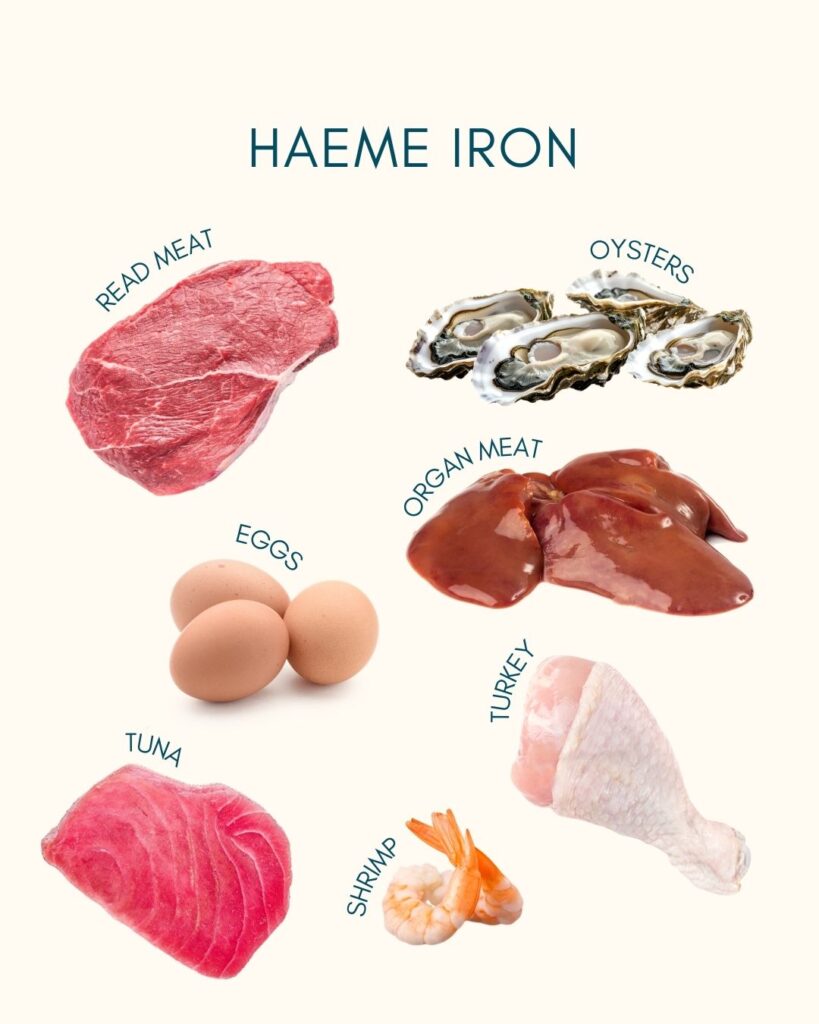
Dietary iron comes in two forms: heme iron, from animal products like meat, and non-heme from plant based sources like beans. Iron from animal foods (heme iron) is absorbed more efficiently than iron from plant foods (non-heme iron), with around 25% of heme iron being absorbed compared to less 17% from non-heme iron.
However, adding a source of vitamin C to plant-based iron sources increases the amount of iron your body absorbs. Vitamin C helps convert the plant based iron from an insoluble ferric state (Fe³⁺) to the soluble ferrous state (Fe²⁺), which is more easily absorbed in the small intestine.
Sources of vitamin C: gauva, kiwi, strawberries, citrus fruit, bell peppers, broccoli, Brussels sprouts, sundried tomato, potatoes (especially with skin on), fresh parsely.
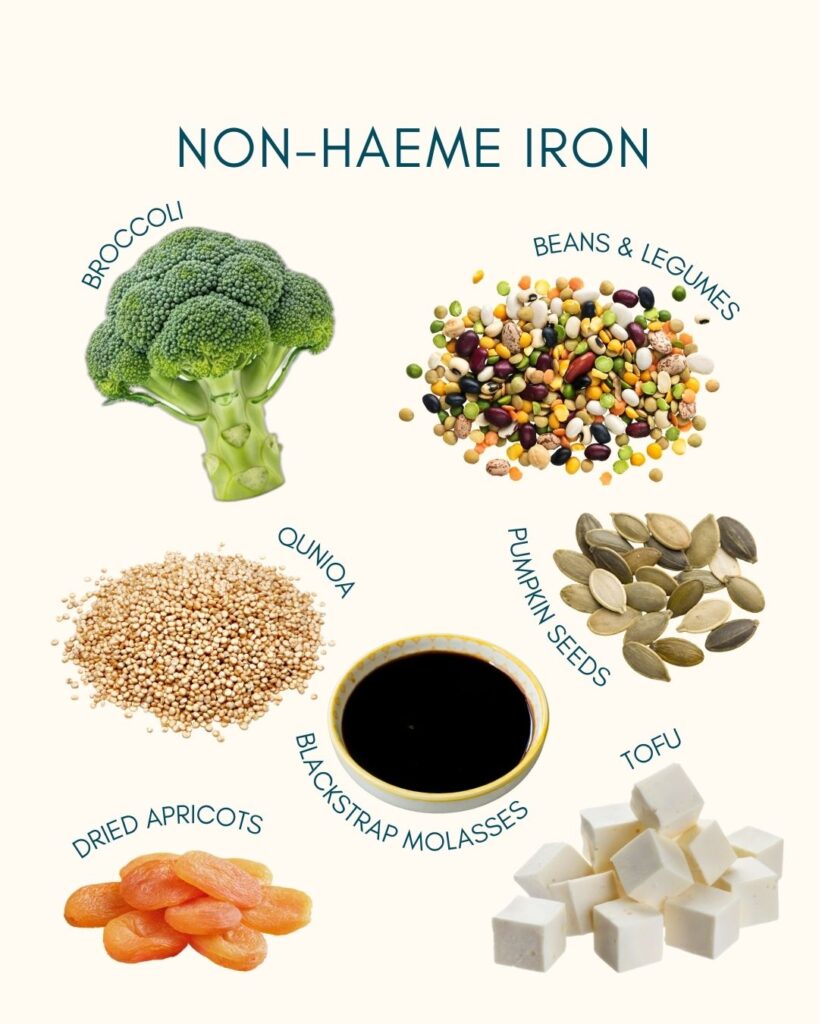
Sources of plant-based iron: kidney beans, white beans, soybeans, chickpeas, lentils, peas, broccoli, kale, Brussels sprouts, mustard greens, chard, spinach, oats, qunioa, teff, sesame seeds (and tahini), pumpkin seeds, flaxseeds, chia seeds, dried apricots, dried figs, blackstrap molasses, moringa.
Examples of plant based iron and vitamin C pairings:
One of the reasons why plant sources of iron are absorbed less easily is because they contain compounds that can block the absorption of iron.
Compounds and foods that may reduce iron absorption:
Tannins and polyphenols: tea, coffee, green tea, white tea, cocoa, red wine.
Phytates: wholegrains, beans, legumes, nuts and seeds.
Calcium: non-fermented dairy (cow’s milk, butter, ricotta, mozzarella) and calcium supplements. Fermented dairy (Greek yogurt, kefir, cheddar cheese) does not inhibit iron absorption.
Zinc supplements: zinc and iron compete for absorption. Zinc supplementation may reduce iron levels.
A note on oxalates – Oxalates, found in spinach, chard, beans and nuts, do impact iron absorption but to a smaller degree compared to phytates, tannins and polyphenols.
A note on eggs – Egg yolks contain a protein called phosvitin that can bind iron and reduce its absorption. However, most evidence for this comes from rat studies, and egg whites have been shown to support iron status in humans. Overall, I believe there’s no need to avoid eating eggs when trying to increase your iron levels.
How to minimise iron inhibitors:
Foods from the allium family, such as garlic, onions, shallots, and leeks, can help improve iron absorption. When garlic is crushed, a compound called alliin is converted into allicin, which then forms diallyl sulfide. An animal and in vitro (meaning outside a living organism) study found that diallyl sulfide increased ferroportin, a protein that helps move stored iron from macrophages, intestinal and liver cells into the bloodstream.
Next time you enjoy an iron rich meal, try adding garlic, onion, shallot, or leek.
Tip: Crush garlic and let it sit for about 10 minutes before cooking to boost its health promoting compounds.
*It should be noted that the evidence for garlic/alliums increasing ferroportin comes primarily from animal (rats) and in vitro (simulated digestion) studies.
Cooking with cast iron cookware can increase the iron content of foods, especially in meat and vegetables (and to a lesser extent in legumes). This extra iron can improve haemoglobin levels and help reduce iron deficiency anaemia.
Lactiplantibacillus plantarum 299v (LP299V) has been shown to support iron status when supplemented at 10 billion CFUs per day. Research demonstrates that LP299V enhances dietary iron absorption, improves serum haemoglobin and iron markers, and helps reduce common gastrointestinal side effects associated with iron supplementation.
For iron deficiency anaemia, LP299V is most effective when used alongside an iron supplement and vitamin C, which together optimise iron uptake and improve tolerance of iron supplementation.
In iron deficient female athletes (serum ferritin <30 μg/L), supplementation of LP299V alongside iron, has been shown to improve both iron status and athletic performance.
LP299V may also help prevent iron deficiency during pregnancy. When supplemented alongside 4.2 mg of iron until week 35 of gestation or until birth, LP299V has been shown to reduce the risk of developing iron deficiency anaemia in the third trimester of pregnancy. Before supplementing during pregnancy please consult a medical professional for guidance.
Lactoferrin is a protein that can bind to iron and facilitate it’s absorption in the small intestine. Supplementation with lactoferrin has been shown to increase haemoglobin, red blood cell count, ferritin and total iron levels, and additionally decrease inflammatory biomarkers, particulary Interleukin-6.
The dosage of lactoferrin in studies addressing iron deficiency and iron deficiency anaemia was 200 mg per day. Please check with your healthcare provider before supplementing.
Dietary sources of lactoferrin come from cow’s milk, with good options being fermented dairy such as yogurt and kefir. Supplement sources are usually labelled as bovine lactoferrin from cow’s milk, or bovine colostrum.
! Most lactoferrin is sourced from cow’s milk, so it is best avoided if you have a cow’s milk allergy.
The most common forms of iron used in supplements are iron salts, including ferrous sulfate, ferrous fumarate, and ferrous gluconate. If you are diagnosed with iron deficiency anaemia, you are likely to be prescribed iron in one of these forms.
These iron salts tend to have lower absorption rates and are more likely to cause gastrointestinal side effects including: nausea, constipation, diarrhoea, and abdominal cramps.
A better tolerated option is ferrous bisglycinate. This form is absorbed more efficiently and is generally associated with fewer digestive side effects.
Around 10–15% of iron from ferrous sulfate is absorbed, compared with approximately 25–30% from ferrous bisglycinate.
Speaking from experience, i’d recommend an iron capsule over a liquid formula as iron takes strongly like blood. But please consult your doctor before making any changes to prescribed medication.
References
Axling, U., Önning, G., Combs, M. A., Bogale, A., Högström, M., & Svensson, M. (2020). The Effect of Lactobacillus plantarum 299v on Iron Status and Physical Performance in Female Iron-Deficient Athletes: A Randomized Controlled Trial. Nutrients, 12(5), 1279. https://doi.org/10.3390/nu12051279
Axling, U., Önning, G., Martinsson Niskanen, T., Larsson, N., Hansson, S. R., & Hulthén, L. (2021). The effect of Lactiplantibacillus plantarum 299v together with a low dose of iron on iron status in healthy pregnant women: A randomized clinical trial. Acta obstetricia et gynecologica Scandinavica, 100(9), 1602–1610. https://doi.org/10.1111/aogs.14153
Azmandian, J., Shamspour, N., Azmandian, A., Ahmadipour, H., & Alinaghi Langari, T. (2025). The Effect of Egg White Meal on Anemia in Patients on Hemodialysis Taking Erythropoietin and Iron Infusion. Journal of renal nutrition : the official journal of the Council on Renal Nutrition of the National Kidney Foundation, 35(3), 419–424. https://doi.org/10.1053/j.jrn.2024.06.003
Bahbah, W. A., Omar, Z. A., El-Shafie, A. M., Mahrous, K. S., & El Zefzaf, H. M. S. (2025). Interventional impact of liposomal iron on iron-deficient children developmental outcome: randomized, double-blind, placebo-controlled trial. Pediatric research, 98(6), 2228–2239. https://doi.org/10.1038/s41390-025-04204-9
Donangelo, C. M., Woodhouse, L. R., King, S. M., Viteri, F. E., & King, J. C. (2002). Supplemental zinc lowers measures of iron status in young women with low iron reserves. The Journal of nutrition, 132(7), 1860–1864. https://doi.org/10.1093/jn/132.7.1860
Fischer, J. A. J., Cherian, A. M., Bone, J. N., & Karakochuk, C. D. (2023). The effects of oral ferrous bisglycinate supplementation on hemoglobin and ferritin concentrations in adults and children: a systematic review and meta-analysis of randomized controlled trials. Nutrition reviews, 81(8), 904–920.
Ishikawa, S. I., Tamaki, S., Arihara, K., & Itoh, M. (2007). Egg yolk protein and egg yolk phosvitin inhibit calcium, magnesium, and iron absorptions in rats. Journal of food science, 72(6), S412–S419. https://doi.org/10.1111/j.1750-3841.2007.00417.x
Jańczuk, A., Brodziak, A., Czernecki, T., & Król, J. (2022). Lactoferrin-The Health-Promoting Properties and Contemporary Application with Genetic Aspects. Foods (Basel, Switzerland), 12(1), 70. https://doi.org/10.3390/foods12010070
Kobayashi, Y., Wakasugi, E., Yasui, R., Kuwahata, M., & Kido, Y. (2015). Egg Yolk Protein Delays Recovery while Ovalbumin Is Useful in Recovery from Iron Deficiency Anemia. Nutrients, 7(6), 4792–4803. https://doi.org/10.3390/nu7064792
Koker, G., Sahinturk, Y., Ozcelik Koker, G., Coskuner, M. A., Eren Durmus, M., Catli, M. M., & Cekin, A. H. (2024). Improved gastrointestinal tolerance and iron status via probiotic use in iron deficiency anaemia patients initiating oral iron replacement: a randomised controlled trial. The British journal of nutrition, 132(10), 1308–1316. https://doi.org/10.1017/S0007114524002757
Mawouma, S., Doudou Walko, F., Mbyeya, J., Hamidou Yaya, S., Awoudamkine, E., & Funtong, C. M. M. (2023). Effect of Allium spices (garlic and onion) on the bioaccessibility of iron from Moringa oleifera leaves. Food science & nutrition, 12(3), 2115–2121. https://doi.org/10.1002/fsn3.3913
Moustarah, F., Daley, S.F. (2024, Jan 8). Dietary iron. In StatPearls. National Library of Medicine. https://www.ncbi.nlm.nih.gov/books/NBK540969/
Nahdi, A., Hammami, I., Brasse-Lagnel, C., Pilard, N., Hamdaoui, M. H., Beaumont, C., & El May, M. (2010). Influence of garlic or its main active component diallyl disulfide on iron bioavailability and toxicity. Nutrition research (New York, N.Y.), 30(2), 85–95. https://doi.org/10.1016/j.nutres.2010.01.004
National Institute for Health and Care Excellent (NICE). (2025, Oct). Anaemia – iron deficiency: scenario: Management of iron deficiency anaemia. https://cks.nice.org.uk/topics/anaemia-iron-deficiency/management/management/
Pope, C. (2025, Aug 12). Ferrous sulfate Patient Tips. Drugs.com. https://www.drugs.com/tips/ferrous-sulfate-patient-tips
Sharma, S., Khandelwal, R., Yadav, K., Ramaswamy, G., & Vohra, K. (2021). Effect of cooking food in iron-containing cookware on increase in blood hemoglobin level and iron content of the food: A systematic review. Nepal journal of epidemiology, 11(2), 994–1005. https://doi.org/10.3126/nje.v11i2.36682
Skolmowska, D., & Głąbska, D. (2022). Effectiveness of Dietary Intervention with Iron and Vitamin C Administered Separately in Improving Iron Status in Young Women. International journal of environmental research and public health, 19(19), 11877. https://doi.org/10.3390/ijerph191911877