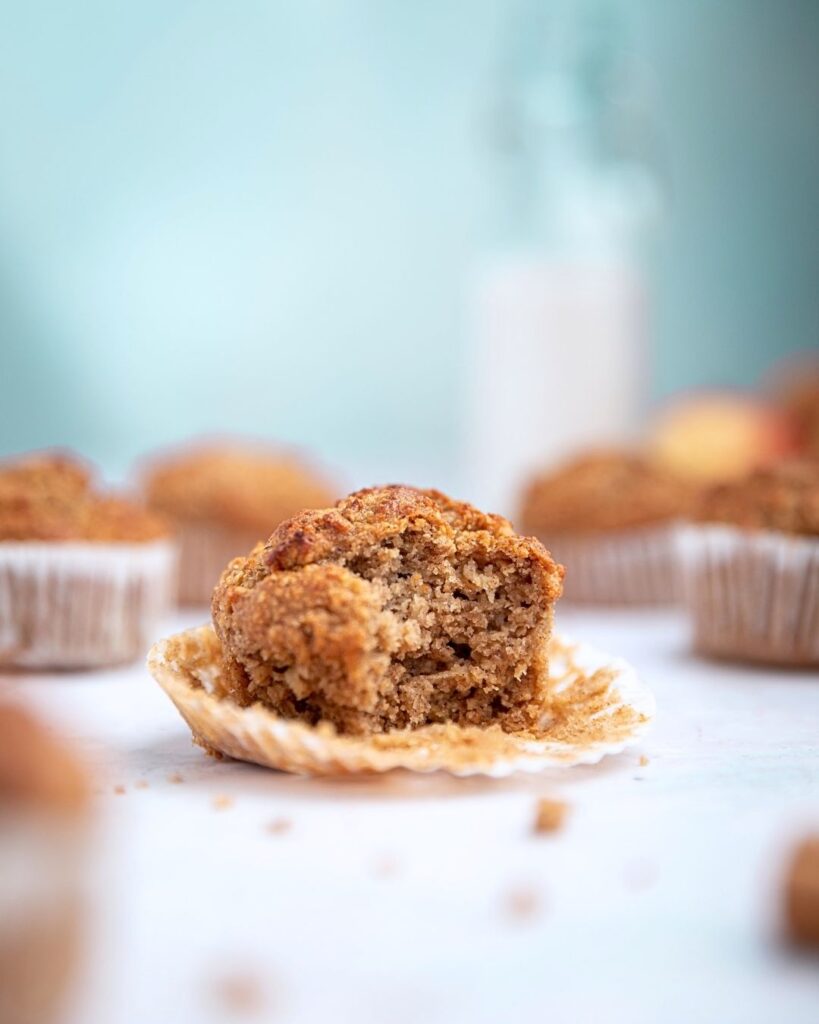
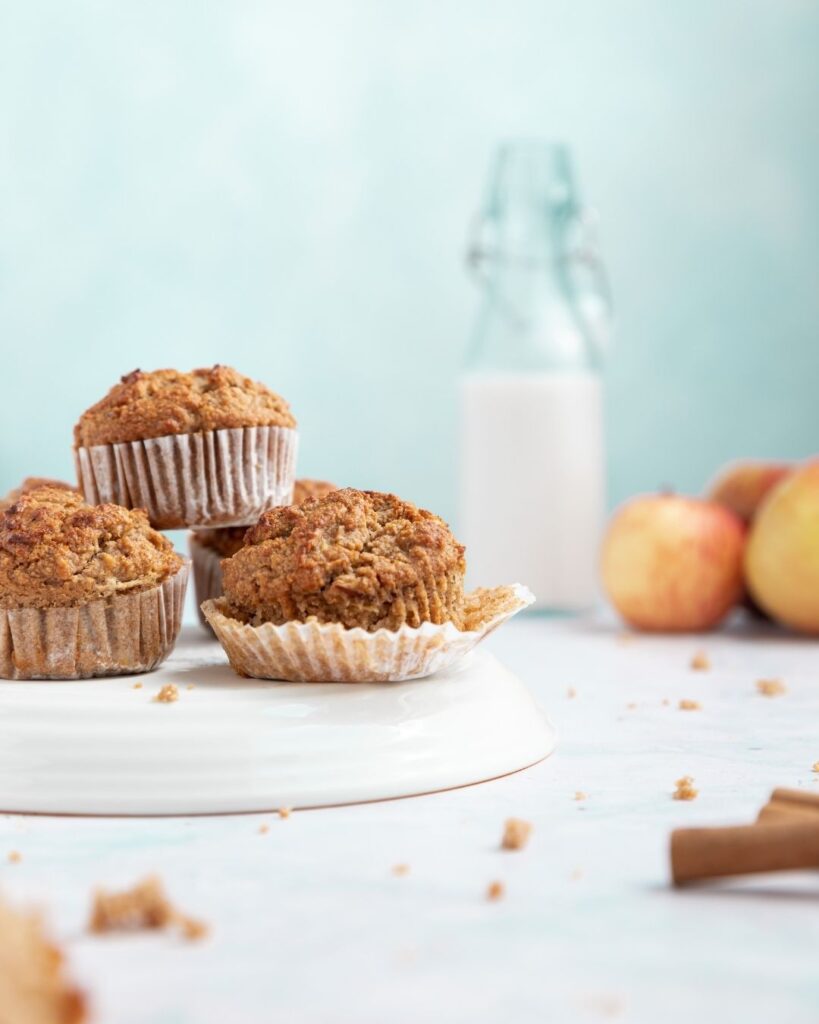
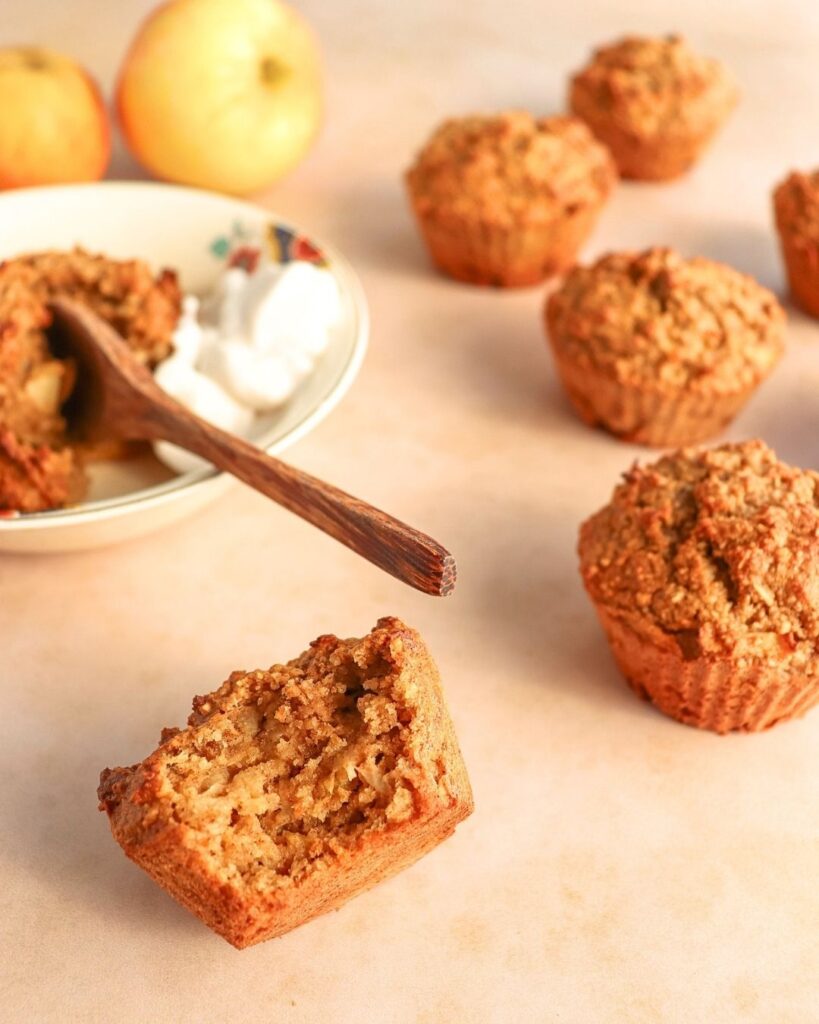
If you’re looking for an easy and tasty muffin that’s gentle on diegstion then these gluten free apple cinnamon muffins are a must try. They’re perfect for breakfast or mid afternoon snack.
I often make a batch of these muffins to keep in the freezer, so they’re ready whenever I need them; whether that’s a quick breakfast or to satisfy a 3pm sweet craving.
The oats, almond flour, apple, and cinnamon in these muffins provide a good sources of fibre to support gut health and help maintain more stable blood sugar levels. The eggs and almond flour also add protein, which supports satiety and further helps with blood sugar balance. Maple, vanilla and apple add just the right amount of sweetness.
What are the health benefits of cinnamon
If, like me, you eat cinnamon regularly I recommmend using Ceylon cinnamon (a.k.a true cinnamon or Cinnamomum zeylanicum) rather than Cassia cinnamaon (a.k.a chinese cinnamon or the cinnamon that is likely to be on the supermarket shelf). This is due to Cassia cinnamon containing much higher levels of coumarin compared to Ceylon cinnamon. AT high levels coumarin can be hepatoxic at meaning it can damage the liver, and for this reason The European Food Safety Authority set the tolerable daily intake of coumarin at 0.1mg per kg of bodyweight. For context, the average person consumes 1 to 3mg per day but those who frequently consume cinnamon can easily exceed the tolerable daily intake.
I buy ceylon cinnamon in bulk (1kg) from Real Food Source. It lasts all year.
What are the health benefits of oats
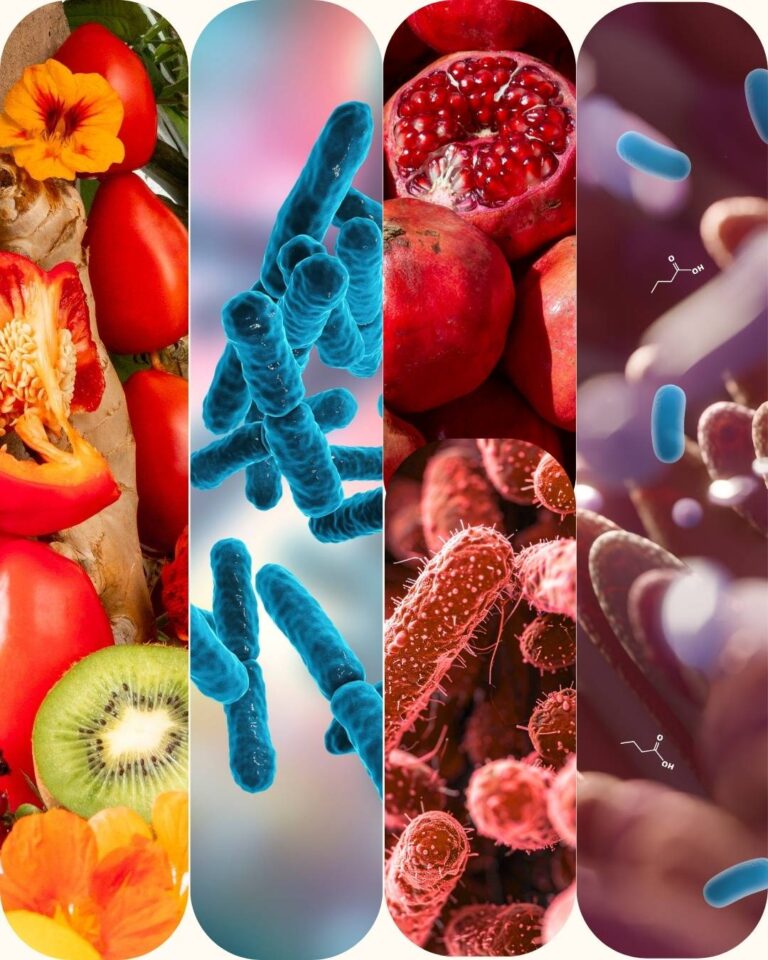
Oats contain both soluble fibre, in the form of β-glucan, and insoluble fibre including lignin and cellulose. These fibres act as prebiotics, meaning they feed beneficial gut bacteria. Oat β-glucan has been shown to increase levels of bacteria that produce short chain fatty acids (SCFAs) such as Akkermansia muciniphila and Faecalibacterium prausnitzii. These SCFAs such as butyrate, acetate and propionate help reduce inflammation and butyrate is particuarly importanat for maintaining the integrity and health of the gut barrier.
Additionally, oat β-glucan may help lower blood glucose levels, total cholesterol and LDL (low density lipoprotein, a.k.a the ‘bad’ cholesterol) cholesterol levels.
You might also like to try:
Apple and Haskap breakfast berry crumble
Spiced Banana And Walnut Gluten Free Muffins
Ingredients
Makes approx 10 to 12 muffins
- 1 cup oat flour (gluten free if needed)
- 1 cup almond flour or meal
- pinch salt
- 2 tsp cinnamon
- 1/4 tsp nutmeg
- 1 tsp baking powder (gluten free if needed)
- 2 eggs
- 2 tbsp coconut oil
- 1 tsp vanilla extract
- 1/4 cup maple syrup
- 2 tbsp unsweetened almond milk
- 1 apple grated
Notes:
– To make oat flour simply add oats to a blender and blend until they resemble flour
– I use Doves Farm Freee gluten free baking powder
– Use any milk you like
– You could also use mixed spice if you like
Method
- Preheat oven to 180 °C.
- Add all the dry ingredients to a bowl: oat flour, almond flour, cinnamon, nutmeg, baking powder, salt. Mix together.
- Make a well in the middle of the dry mixture. Add the wet ingredients: eggs, oil, vanilla, maple syrup, milk. Mix to combine the dry with the wet. I do a figure of 8 action to fold the ingredients in.
- Add the grated apple in and combine.
- If the mixture seems a bit too dry, add a bit more milk.
- Transfer the mixture to lined muffin cases. I use silicone cupcake cases and line them with a tiny bit of coconut oil. When using a tin muffin case tray, I find a little coconut oil with a light dusting of oat flour helps prevent the muffins sticking.
- Bake in the over or air fryer at 180 °C for 20 to 25 minutes. They may bake quicker in the air fryer, more like 15 to 20 minutes.
Serving suggestions
I like to have 1 to 2 muffins for breakfast with yogurt (I use Nush strawberry or Coconut collab, but you can also use Greek yogurt) and berries.
Or post workout, I enjoy a muffin with chocolate chia protein milk and berries. Chocolate chia protein milk: 1 tbsp chia seed, heaped tbsp protein powder, 1 tsp cacoa powder, almond milk (no idea how much as I eyeball it but more less milk = thicker pudding like texture). Blend.
References
Anderson, J. W., Gilinsky, N. H., Deakins, D. A., Smith, S. F., O’Neal, D. S., Dillon, D. W., & Oeltgen, P. R. (1991). Lipid responses of hypercholesterolemic men to oat-bran and wheat-bran intake. The American journal of clinical nutrition, 54(4), 678–683. https://doi.org/10.1093/ajcn/54.4.678
European Food Safety Authority (EFSA). (2008). Scientific Opinion of the Panel on Food Additives, Flavourings, Processing Aids and Materials in Contact with Food on a request from the European Commission on Coumarin in flavourings and other food ingredients with flavouring properties. The EFSA Journal 793, 1–15. https://doi.org/10.2903/j.efsa.2008.793
Fabiano, G. A., Shinn, L. M., & Antunes, A. E. C. (2023). Relationship between Oat Consumption, Gut Microbiota Modulation, and Short-Chain Fatty Acid Synthesis: An Integrative Review. Nutrients, 15(16), 3534. https://doi.org/10.3390/nu15163534
Kawatra, P., & Rajagopalan, R. (2015). Cinnamon: Mystic powers of a minute ingredient. Pharmacognosy research, 7(Suppl 1), S1–S6. https://doi.org/10.4103/0974-8490.157990
Yamada, T., Katsutani, N., Maruyama, T., Kawamura, T., Yamazaki, H., Murayama, N., Tong, W., Yamazoe, Y., & Hirose, A. (2022). Combined Risk Assessment of Food-derived Coumarin with in Silico Approaches. Food safety (Tokyo, Japan), 10(3), 73–82. https://doi.org/10.14252/foodsafetyfscj.D-21-00015