Hopefully this post helps clarify what nutritional therapy is, what nutritional therapists actually do, who we can support, and how our role differs from (and can complement) that of a dietitian.
What is nutritional therapy?
Nutritional therapy is a personalised, evidence-informed approach to health. Rather than giving everyone the same diet, supplements and testing recommendations, each health plan is unique. A nutritional therapist considers the individual including: their medical history, symptoms, diet, lifestyle, and goals, to develop personalised nutrition, lifestyle and functional testing recommendations.
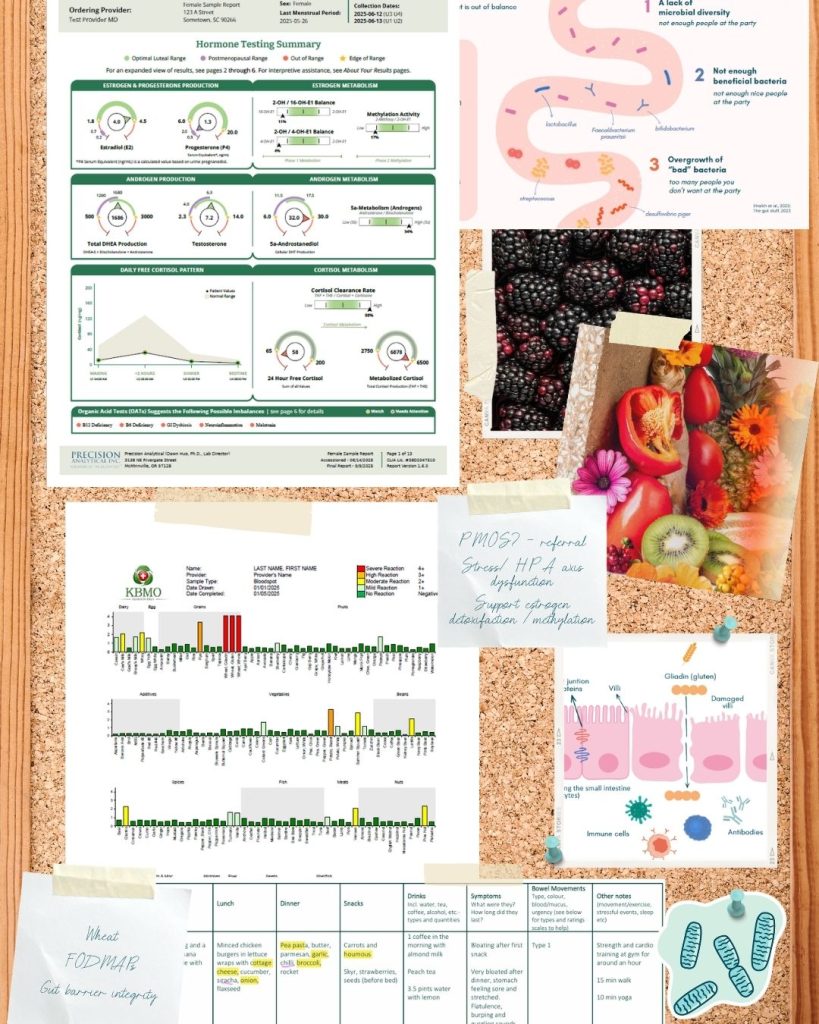
Registered nutritional therapists may use functional testing to gain a more detailed picture of how your body is functioning. Depending on your individual needs, this might include advanced stool testing, comprehensive hormone testing or assessing nutrient status. Testing helps remove the guesswork.
What does a nutritional therapist do?
Nutritional therapists tend to work in private practice 1 on 1 with clients, though they may also do group work, academic work or corporate work. Nutritional therapy is not a replacement for medical healthcare, it’s complementary.
Typically, an initial consultation with a nutritional therapist is around 1 hour and follow up appointment as 30 to 45 minutes. This allows time for clients to share their story, feel heard and supported.
A nutritional therapist might:
Take a detail medical and health history
Ask about symptoms
Ask about diet, lifestyle, supplements and medication
Consider antecedents (predisposing factors like genetics), triggers (specific events that provoke symptoms like food poisoning or entering perimenopause) and mediators (ongoing biochemical imbalances like nutrient deficiencies, blood sugar imbalance, gut dysbiosis, stress that perpetuate a health condition)
Identify areas where nutrition may be contributing to someone’s health concerns
Provide personalised dietary, lifestyle, supplement and testing recommendations
Review progress or challenges and adapt recommendations
Work alongside a person’s GP or other healthcare professionals
Refer a client back to their GP when symptoms require medical investigation
For me, nutritional therapy isn’t about handing you a meal plan or restricting food groups unnecessarily. It’s about looking at the details and the bigger picture to figure out why you’re experiencing gut or skin symptoms, in order to provide recommendations that are right for you.
Is a nutritional therapist the same as a dietitian?
Neither profession is simply “better” than the other. They have different training, roles and scopes of practice, so the right professional depends on what you need help with.
Nutritional Therapist
Main focus Personalised nutrition and lifestyle support
Regulation Voluntary – BANT (British Association for Nutrition and Lifestyle Medicine) and CNHC (Complementary and Natural Healthcare Council)
Protected title? No. Ensure the practitioner is registered.
Qualification Bachelor’s (Hons) degree or equivalent graduate diploma in nutritional therapy
Typical setting Often private practice or complementary healthcare
Work with health conditions? Yes, within scope of practice and alongside medical care.
Dietitian
Main focus Dietary management of health conditions
Regulation Statutory – BDA (British Dietetic Association) and regulated by HCPC (Health and Care Professions Council)
Protected title? Yes.
Qualification Bachelor’s (Hons) degree in dietetics (undergraduate or postgraduate)
Typical setting NHS, hospitals, community and private healthcare
Work with health conditions? Yes, including complex health conditions such as advanced kidney disease and conditions requiring tube feeding.
Nutritional therapist
Dietitian
Main focus
Evidence-based, personalised nutrition and lifestyle support
Evidence-based dietary support and management of health conditions/ diseases
Regulation
Voluntary – BANT (British Association for Nutrition and Lifestyle Medicine) and CNHC (Complementary and Natural Healthcare Council)
Statutory – BDA (British Dietetic Association) and regulated by HCPC (Health and Care Professions Council)
Protected title
No. Ensure the practitioner is registered.
Yes.
Qualifications
Bachelor’s (Hons) degree or equivalent graduate diploma in nutritional therapy
Bachelor’s (Hons) degree in dietetics (undergraduate or postgraduate)
Typical setting
Private practice, complementary healthcare
NHS, hospitals, private healthcare, and community settings
Can work with health conditions?
Yes, within scope and alongside medical care.
Yes, including complex clinical conditions such as advanced kidney disease and conditions requiring tube feeding.
What can a dietitian do that a nutritional therapist can't?
Dietitians can assess, diagnose and treat diet and nutrition-related health problems. A nutritional therapist cannot diagnose or claim to treat health conditions.
Dietitians are able to provide specialist advice and care for conditions including food allergies, gastrointestinal disease, liver disease, kidney disease and conditions that require tube feeding.
A dietitian may be particularly appropriate where someone needs:
Management of a diagnosed medical condition as part of multidisciplinary healthcare
Nutritional management within hospital care (such as tube feeding)
Support with complex clinical conditions (such as kidney disease, an IBD flare up, active eating disorders)
Nutritional therapists work differently. We provide personalised nutrition and lifestyle support within our scope of practice and refer or work alongside medical professionals where appropriate.
What qualifications do you need to be a nutritional therapist?
As of September 2020, BANT (the professional association for nutritional therapists) requires nutritional therapists to have a “BSc (Hons) degree or higher from a recognised university and qualifications from a NTEC accredited Nutritional Therapy course” in order to be a member.
I completed a BSc (Hons) in nutritional therapy with the Institute for Optimal Nutrition (ION), validated by the University if Portsmouth. I am also a registered nutritional therapy practitioner, with BANT membership and registration with the CNHC.
It’s important to note that nutritional therapy isn’t a replacement for seeking appropriate medical investigation. If IBS is suspected, it is important to speak to your GP to rule out conditions that can cause similar symptoms, such as coeliac disease or inflammatory bowel disease.
Hormonal health including sex hormones, cortisol and thyroid health
Lifestyle factors such as stress management
Acne isn’t simply a skin problem to be fixed by cutting out a long list of foods. Nutritional therapy can delve deeper to find why your skin is breaking out and identify what nutritional or lifestyle factors are worth exploring. Nutritional therapy can work alongside appropriate medical, dermatology and aesthetic care.
Want personalised support?
Learn more about personalised IBS and acne support.
Nutritional therapy may be suitable for people who:
Want personalised nutrition support rather than generic advice
Have ongoing digestive symptoms such as bloating, constipation or IBS
Are struggling with acne or other skin concerns
Want to understand how their diet may be affecting their symptoms
Feel overwhelmed by conflicting nutrition advice
Want help making sustainable dietary changes
Want help transition to dairy or gluten free diet, for example if they’re lactose intolerance, have a milk allergy, coeliac disease or non-coeliac gluten sensitivity
My clinic focuses primarily on gut and skin health, including IBS and acne.
Free resources
Two practical guides. Zero cost. A great place to start.
Two practical guides. Zero cost. A great place to start.